Camera Enforcement Starts on 28 September 2026
Cornwall Council will begin enforcing existing traffic restrictions in Market Jew Street and Market Place, Penzance, using camera technology from 28 September 2026. The scheme forms part of Cornwall Council’s wider commitment to support local aspirations for creating safer, cleaner and more accessible town centres for residents, businesses and visitors. Developed in partnership with Penzance BID and Penzance Council, the scheme supports a shared vision for a vibrant, accessible and attractive town centre that benefits the local community, businesses and visitors alike.
Following a public consultation and approval from the Department for Transport, Cornwall Council has been granted powers to enforce certain moving traffic restrictions using cameras. These powers help improve compliance with existing restrictions, support road safety and accessibility, and enable Devon & Cornwall Police to focus on wider policing priorities.
Supporting a Safer and More Accessible Town Centre
Market Jew Street and Market Place are key destinations within Penzance town centre, providing access to local businesses, public services, and transport connections. Existing vehicle restrictions were introduced to improve safety, accessibility and the overall environment for people using the town centre. However, some drivers continue to ignore these restrictions, affecting the benefits they were designed to achieve.
Camera enforcement will help ensure that these restrictions are followed, creating a safer and more welcoming environment for everyone who lives, works, shops and visits Penzance.
What Restrictions Will Be Enforced?
Enforcement will apply to the following existing traffic restrictions:
1) Prohibition of Motor Vehicles
Market Jew Street and Market Place
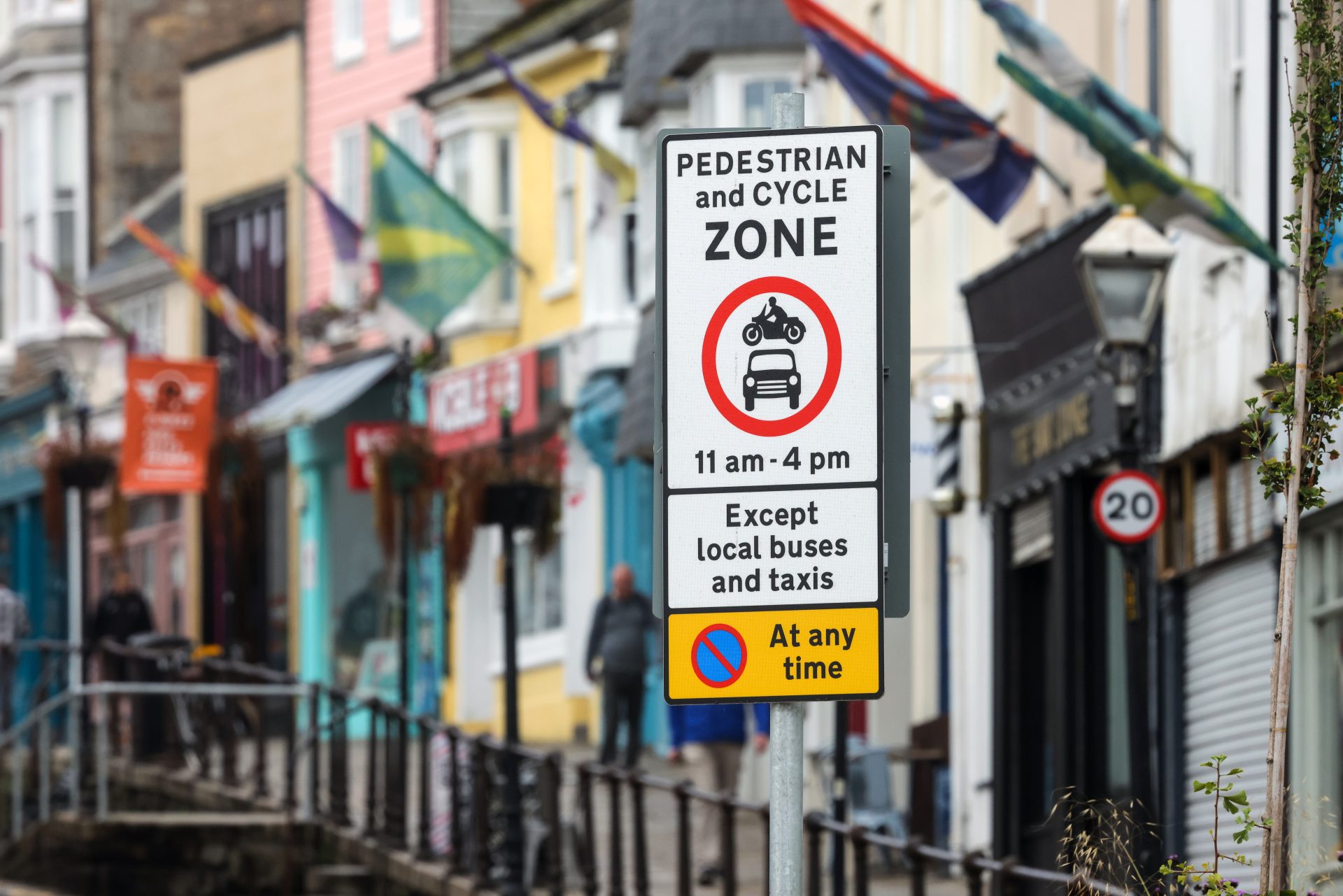
- 11.00am to 4.00pm daily
- Except local buses and licensed hackney carriages
2) Contra-flow Bus Lane / One-Way Restriction
Market Place
- except for buses and pedal cycles
3) No Right Turn
Adelaide Street into Market Jew Street
How Will Enforcement Work?
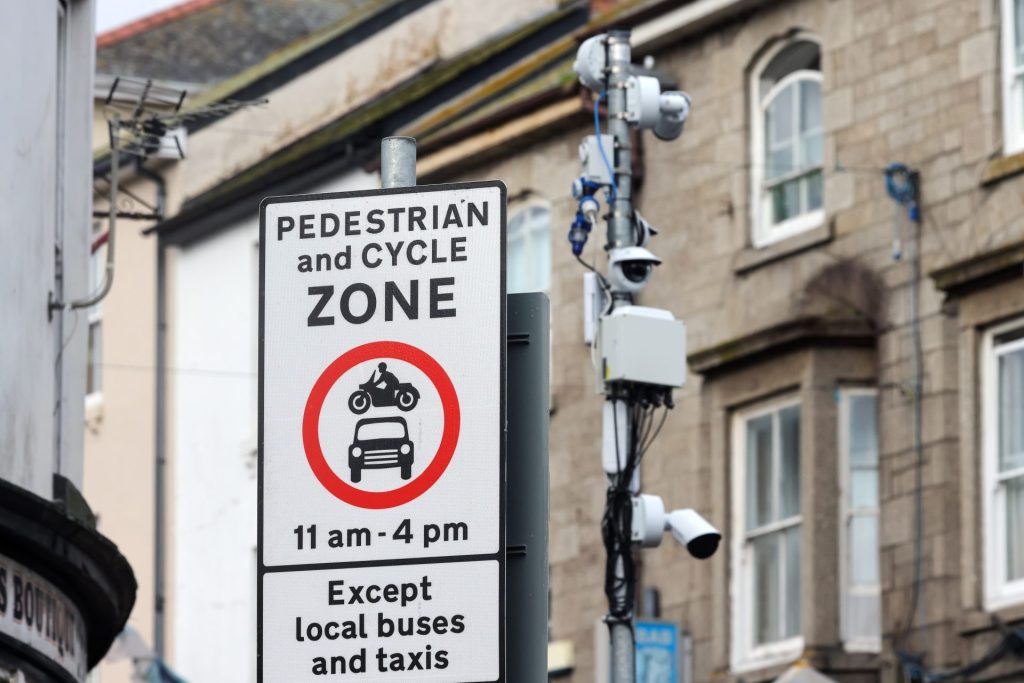
Automatic Number Plate Recognition (ANPR) cameras have been installed at approved enforcement locations. Potential contraventions will be reviewed by trained officers before any enforcement action is taken. Where a contravention is confirmed, a Penalty Charge Notice (PCN) will be issued to the registered keeper of the vehicle.
The enforcement cameras will monitor:
- Market Jew Street at the junction with Albert Street
- Market Place at the junction with The Greenmarket
- Adelaide Street at the junction with Market Jew Street
Penalty Charges
The penalty charge for a moving traffic contravention is currently:
£70, reduced to £35 if paid within 21 days. Penalty charge levels are set nationally.
Exempt Vehicles
Some vehicles are exempt from certain restrictions where exemptions are included within the relevant Traffic Regulation Order (TRO). Cornwall Council maintains exemption lists to ensure authorised vehicles are not incorrectly issued with a PCN. Examples include local buses, licensed hackney carriages, emergency service vehicles and other authorised vehicles specified within the relevant TRO.
Blue Badge holders will not be exempt from the restrictions, however, a Blue Badge holder parked in the disabled parking spaces on the street before the restrictions begin at 11am will be able to leave without facing a penalty.
Market Jew Street Accessibility Guide
Public Consultation
Before introducing camera enforcement, Cornwall Council carried out a formal public consultation between 14 May and 25 June 2025. The consultation sought views from residents, businesses and stakeholders on the proposed use of moving traffic enforcement powers in Market Jew Street and Market Place. The consultation produced a positive response overall, with strong support for the introduction of enforcement at both locations. The feedback helped inform the Council’s application for enforcement powers.
Frequently Asked Questions
For more information about Moving Traffic Enforcement, including how enforcement works, vehicle exemptions, appeals, penalty charges and the use of income from PCNs, please see the Frequently Asked Questions section below:
What is Moving Traffic Enforcement?
Moving Traffic Enforcement (MTE) is the use of camera technology to help enforce certain traffic restrictions on Cornwall’s roads. Where a vehicle is observed contravening a signed restriction, Cornwall Council may issue a Penalty Charge Notice (PCN) under civil enforcement powers. Until recently, these traffic offences were enforced only by the Police. In December 2025, the Government gave Cornwall Council the authority to enforce certain moving traffic restrictions using cameras.
Why is Cornwall Council introducing Moving Traffic Enforcement?
Cornwall Council has adopted these enforcement powers to help improve the safety and operation of the highway network. These powers allow the Council to support compliance with traffic restrictions while enabling Devon & Cornwall Police to focus on other policing priorities. The aims of enforcement include:
- Improving road safety
- Reducing congestion
- Supporting reliable public transport services
- Improving air quality
- Supporting walking, wheeling and cycling
- Improving the efficiency and resilience of the highway network
What types of restrictions can be enforced?
Moving Traffic Enforcement may be used at locations where specific traffic restrictions are in place, including:
- No Entry restrictions
- Prohibited turns (such as No Right Turn or No Left Turn)
- Restrictions on certain vehicle movements
- Pedestrian or vehicle-restricted zones
- Yellow box junctions
- Other traffic restrictions supported by legal orders and appropriate signage
How are locations selected for enforcement?
Cornwall Council takes an evidence-led approach when considering locations for enforcement. Sites are assessed against factors such as:
- Road safety concerns
- Levels of non-compliance
- Traffic congestion
- Impacts on public transport reliability
- Local traffic management objectives
Camera enforcement will only be introduced where there is a clear and demonstrable need.
Why Market Jew Street, Penzance?
Market Jew Street and Market Place are key destinations in Penzance town centre, serving local businesses, public services, and transport links. Existing vehicle restrictions were introduced to improve safety, accessibility, and the town centre environment. However, some drivers continue to enter the area during restricted times. Enforcement cameras will help ensure these existing restrictions are followed, creating a safer and more accessible space for residents, businesses, and visitors.
What is being enforced in Market Jew Street?
Camera enforcement will apply to:
Prohibition of Motor Vehicles 11am-4pm, except for local buses and taxis (Hackney Carriages)
- Including Market Jew Street and Market Place
Contra-flow Bus Lane (including pedal cycles) / One-Way Traffic Restriction
- Market Place
‘No right turn’
Adelaide Street into MJS
Will any vehicles be exempt from Moving Traffic Enforcement?
Yes. Some vehicles are exempt from certain traffic restrictions where an exemption is included in the relevant Traffic Regulation Order (TRO).
Cornwall Council will maintain an exemption list for each restriction being enforced. This list will be used during the enforcement process to identify vehicles that are permitted to use a restricted route and should not receive a Penalty Charge Notice (PCN).
For example, in Market Jew Street, exemptions apply to local buses using the one-way restriction in Market Place, and to both local buses and licensed hackney carriages using the Prohibition of Driving restriction in Market Jew Street.
Other exempt vehicles may include emergency service vehicles, authorised utility vehicles, highway maintenance vehicles, and any other vehicle types specified in the relevant Traffic Regulation Order.
Are Blue Badge holders exempt?
No. Blue Badge holders will not be exempt from the restrictions. However, a Blue Badge holder parked in the disabled parking spaces on the street before the restrictions begin at 11am will be able to leave without facing a penalty.
How can I access Market Jew Street during the restriction?
There are a number of measures supporting continued access to Market Jew Street during the hours of restrictions, these include:
- Bus services
- Nearby Blue Badge parking (see map above)
- Free Shop Mobility scooter hire
- Upgraded Wharfside lifts
For further information please see the Market Jew Street Accessibility Guide on the Lets Talk webpage.
Was there consultation for the Moving Traffic Enforcement?
Yes. Before Cornwall Council could introduce Moving Traffic Enforcement powers, it was required to undertake a formal public consultation. This provided residents, businesses and other stakeholders, in Penzance, with an opportunity to comment on the proposal for the Council to undertake civil enforcement of moving traffic contraventions in Market Jew Street.
The consultation ran from 14 May to 25 June 2025. Feedback received was carefully considered before Cornwall Council decided to apply to the Department for Transport for the necessary enforcement powers. The consultation produced a positive response overall, with strong support for the introduction of enforcement at both locations.
The legal order granting Cornwall Council these powers was laid before Parliament on 13 November 2025, and the powers came into effect on 9 December 2025.
How will Moving Traffic Enforcement work?
Automatic Number Plate Recognition (ANPR) cameras will be installed at approved enforcement locations. Potential contraventions are reviewed by trained officers before any enforcement action is taken. Where a contravention is confirmed, a PCN will be issued by post to the registered keeper of the vehicle.
Will there be warning signs?
Yes. Enforcement locations will be clearly signed and advance warning signs will be provided where appropriate. Supporting motorists to understand and comply with restrictions is an important part of the scheme.
How much is the penalty charge?
The penalty charge for a moving traffic contravention is currently:
£70, reduced to £35 if paid within 21 days.
Penalty charge levels are set nationally.
Can I challenge a Penalty Charge Notice?
Yes. Anyone who receives a PCN has the right to challenge it if they believe it was incorrectly issued. Information explaining how to make representations or appeal will be included with the notice.
Is the aim of the scheme to generate income?
No. The primary purpose of Moving Traffic Enforcement is to improve compliance with traffic restrictions, enhance road safety and support the effective operation of Cornwall’s transport network. As compliance improves, the number of PCNs issued is expected to reduce.
What happens to income generated by Penalty Charge Notices?
Income from PCNs must first cover the costs of administering and operating the enforcement service. Any surplus income is legally ring-fenced and can only be used for purposes set out in legislation, including:
- Road safety improvements
- Congestion reduction initiatives
- Public transport improvements
- Air quality measures
- Highway and environmental improvement projects
It cannot be used to fund unrelated council services.
Will more locations be enforced in the future?
Potentially. The Council continues to review locations across Cornwall where camera enforcement could provide benefits. Any future sites would be assessed individually and, where required, subject to consultation and statutory processes.
Will Devon & Cornwall Police still enforce moving traffic offences?
Yes. Devon & Cornwall Police retain their existing enforcement powers. Moving traffic offences may therefore be subject to both police and civil enforcement. In the unlikely event that both a Police Fixed Penalty Notice and a Council PCN are issued for the same offence, the police action would take precedence.
How will Cornwall Council measure the success of Moving Traffic Enforcement?
The Council will monitor each enforcement location to understand its effectiveness. Measures may include:
- Changes in compliance levels
- Reductions in prohibited vehicle movements
- Improvements to traffic flow
- Road safety outcomes
- Public transport reliability
- Numbers of warning notices and PCNs issued
The overall aim is to encourage safer and more responsible use of Cornwall’s road network.