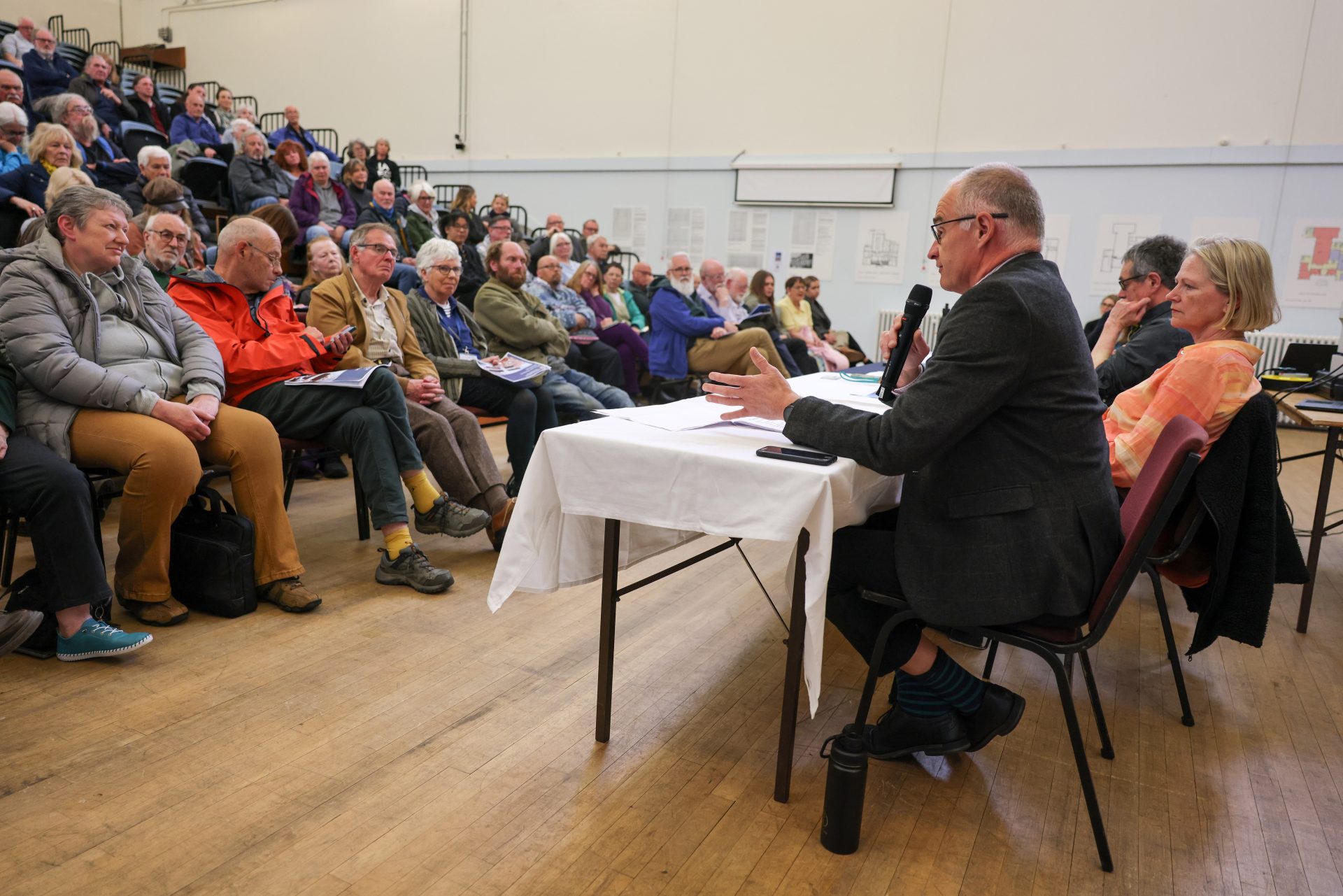
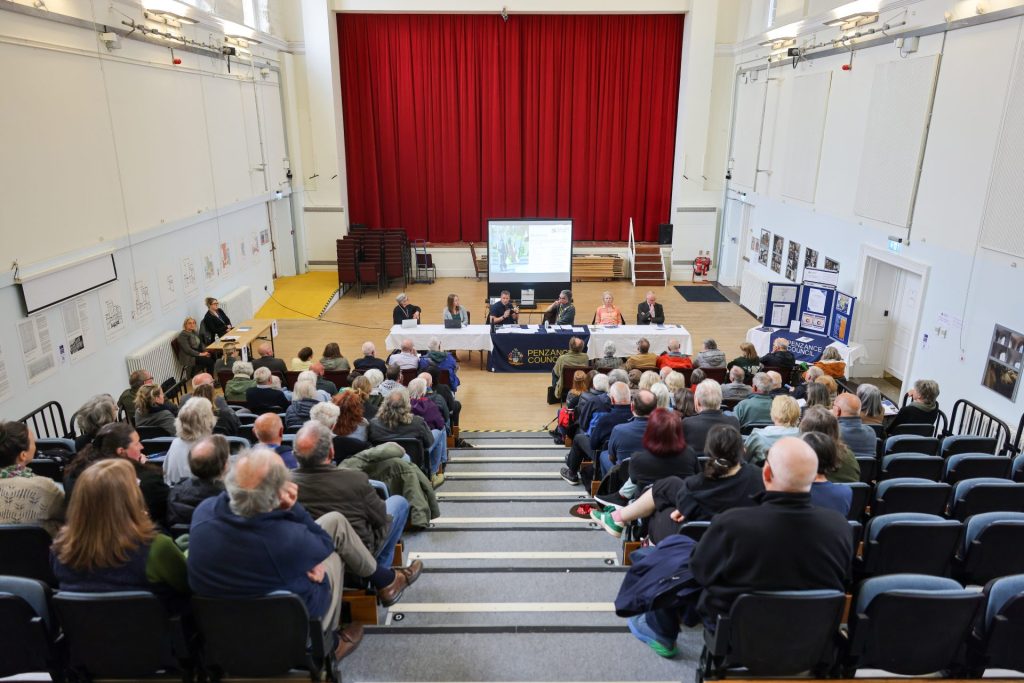
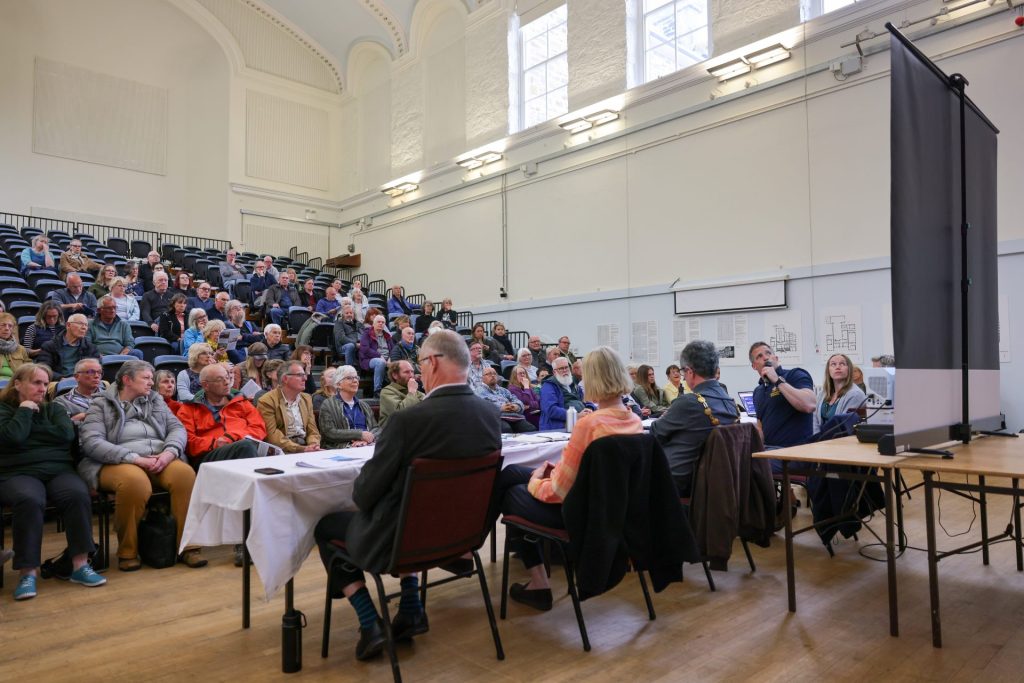
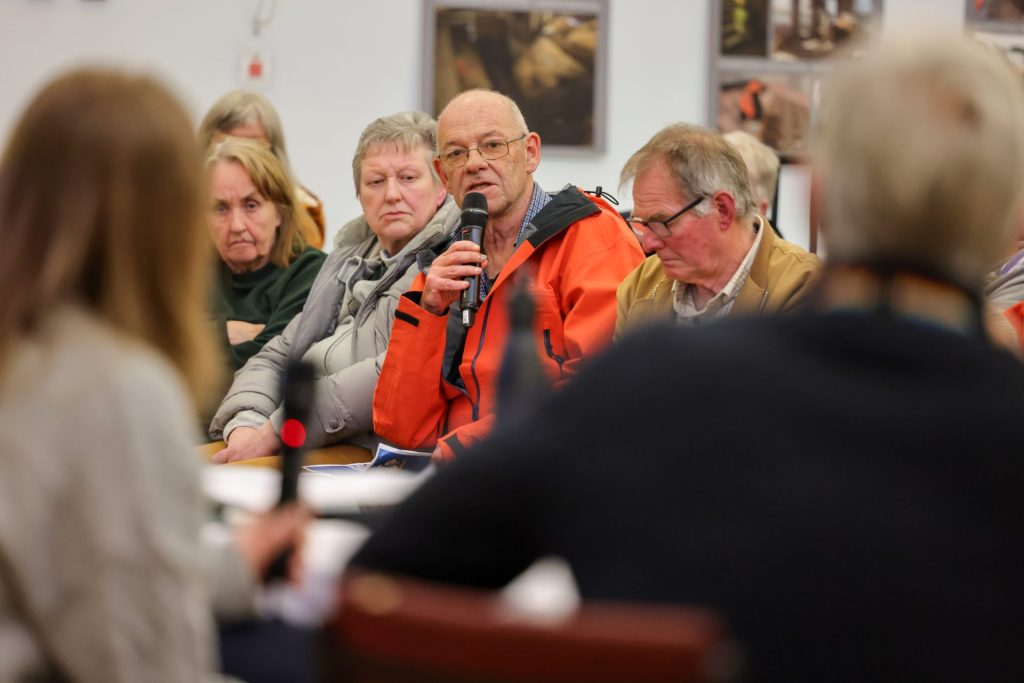
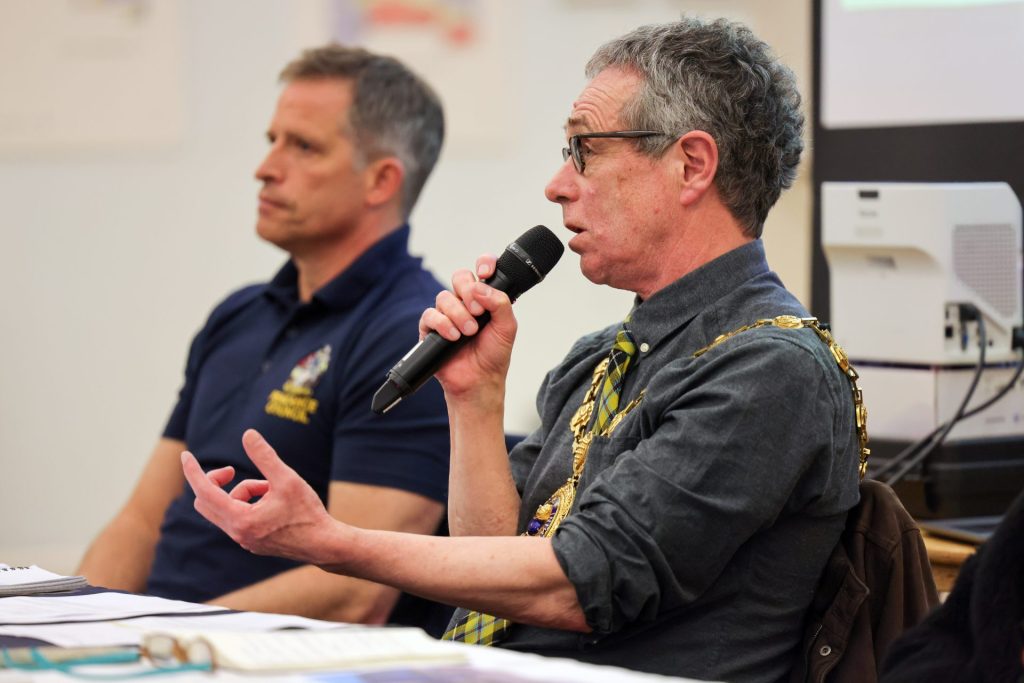
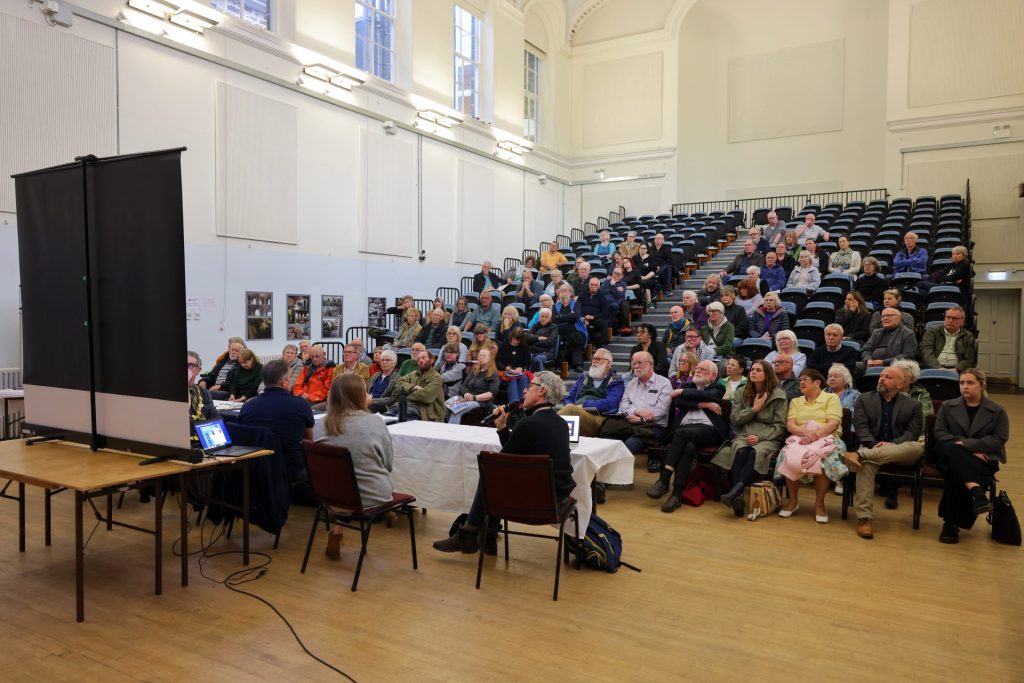
On Monday 20 April, local residents attended Penzance Council’s 45th Annual Town Meeting at St John’s Hall in Penzance.
The Annual Town Meeting is a chance for members of the public to get an overview of the work of Penzance Council from the past year, as well as hearing about plans for the future. It is also an opportunity for residents to raise matters with the Council and ask questions during a Q&A session following the presentations.
This year, Penzance Council was joined by Penzance BID and Jubilee Pool who gave updates on the town centre and the iconic saltwater lido. Other topics covered in Penzance Council’s presentation included anti-social behaviour, Penzance’s bid for UK Town of Culture, the new Coach House Café, and Penzance Council’s 2026/27 budget.
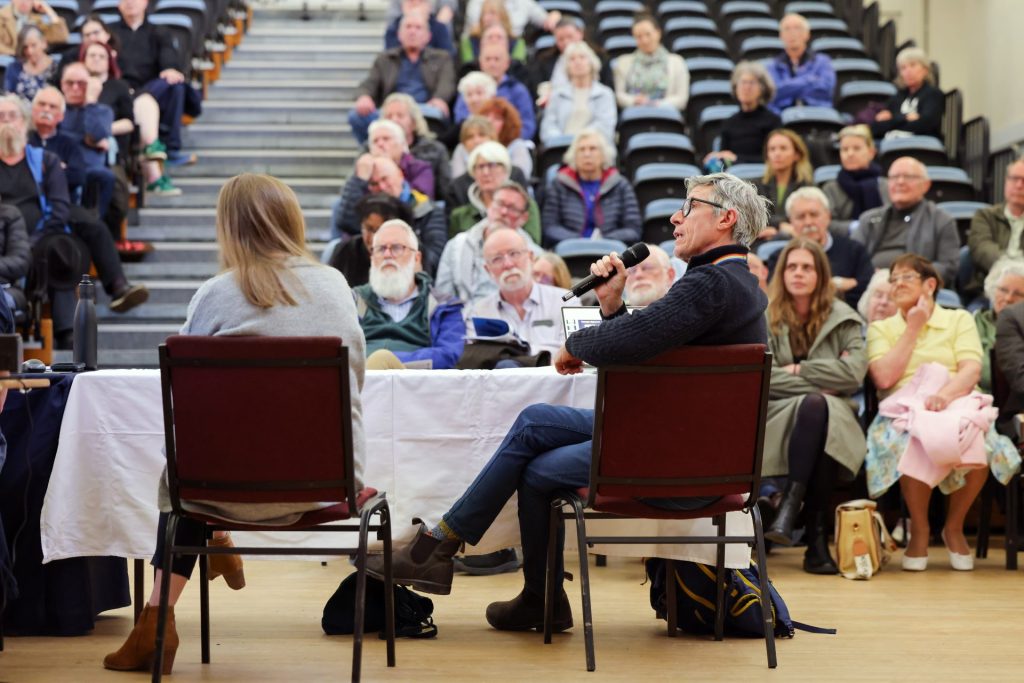
Representatives from Cornwall Council and the Environment Agency were also at the meeting to give a presentation outlining the Mounts Bay Coastal Resilience Strategy.
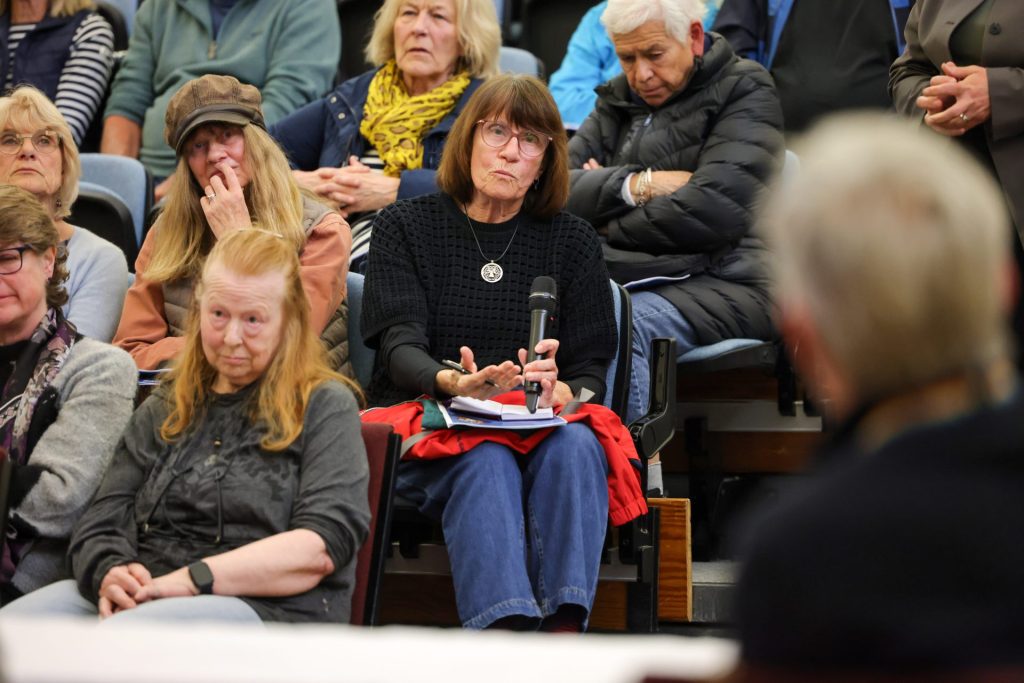
Following the presentations, the panel took questions from the audience in a Q&A session. Those questions – and the answers provided by Penzance Council with the input of Penzance BID – are summarised below:
Weed control, pavements and the use of chemicals
Q: Why is chemical weed spraying being proposed, and what is Penzance Council doing about it?
Penzance Council explained that Cornwall Council wrote to Town and Parish Councils at the end of March proposing a blanket glyphosate spraying programme on Highways land and pavements, with implementation due to begin from 1 May.
Penzance Council’s position is that:
- the proposal was introduced at very short notice.
- the opt-out process came with conditions and legal implications that were not workable.
- budgets for the year had already been set in January, so councils were not in a position to absorb new responsibilities at that stage.
Penzance Council has objected strongly, alongside other towns across Cornwall.
Q: Will Penzance Council use chemicals in the areas it manages?
No. Penzance Council stated clearly that it does not use chemical weed spraying in the areas it is responsible for, and intends to continue maintaining those areas without chemicals.
Q: Why can’t the Town Council simply take over all pavement weed management?
Penzance Council explained that its open spaces team is small and already manages parks, open spaces, play areas, public toilets and other services. It can maintain the areas it directly manages, but it cannot simply absorb responsibility for the whole Highways network without proper planning, staffing and budget.
Q: Are there alternatives to spraying?
Yes. The discussion highlighted:
- better equipment for manual weed removal.
- more coordinated seasonal maintenance.
- possible volunteer-supported community action, if structured safely and properly.
Penzance Council welcomed the idea that this debate could lead to more local involvement and more awareness of how this work is done.
NOTE: The day after the Penzance Council Annual Town Meeting, Cornwall Council voted to “pause the commencement of chemical weed treatment currently scheduled for May 2026 until a meaningful public consultation process has been completed.”
In the motion brought to Cornwall Councillors, it was stated that the “opt-out scheme as designed is financially coercive. Town and parish councils that have democratically resolved to avoid glyphosate — exercising a principled environmental and public health position — are placed in an impossible position by the terms Cornwall Council has set.”
Cornwall Council also recognised “that the decision to reintroduce chemical weed treatment using glyphosate represents a significant policy reversal with ecological, public health and democratic implications for communities across Cornwall.”
There is no spraying of chemicals on sites owned by Penzance Council, and, following Cornwall Council’s announcement, Penzance Council is pleased to confirm that our long-established chemical-free weed management programme will continue across the wider Parish until further notice.
Car parking charges and town centre access
Q: Why are car parking charges such a concern, and what is being done about them?
Residents raised strong concerns that car parking charges are too high, including for short stays, and that this is:
- putting people off visiting the town centre.
- impacting on local trade and footfall.
- creating barriers for both residents and visitors.
There was a clear feeling that current pricing does not support the day-to-day use of the town by local people.
Q: Who controls the car parking charges?
Penzance Council explained that it does not control most town centre car parking charges.
The majority of car parks are owned and operated by Cornwall Council.
Penzance Council operates one car park, which:
- charges £2.50 per day
- is free after 4pm
The contrast between this and Cornwall Council’s pricing was noted as part of the concerns raised.
Q: What is Penzance Council doing about it?
Whilst the Town Council does not set the charges, it confirmed that it is actively advocating on behalf of residents and businesses.
This includes:
- asking Cornwall Council to listen more closely to local concerns.
- pushing for better solutions for residents, including:
- lower local rates where possible
- retaining or improving free parking after 4pm
- raising the wider impact of pricing on town centre vitality and accessibility
Penzance Council also highlighted the importance of returning to more meaningful engagement and negotiation with Cornwall Council, so that local evidence and lived experience are properly reflected in decisions.
Q: What happens next?
Discussions with Cornwall Council are ongoing.
Penzance Council emphasised that it will continue to:
- represent the concerns raised by residents
- challenge where current arrangements are not working
- push for a more balanced approach that supports both the local economy and community access.
Antisocial behaviour, policing and shoplifting
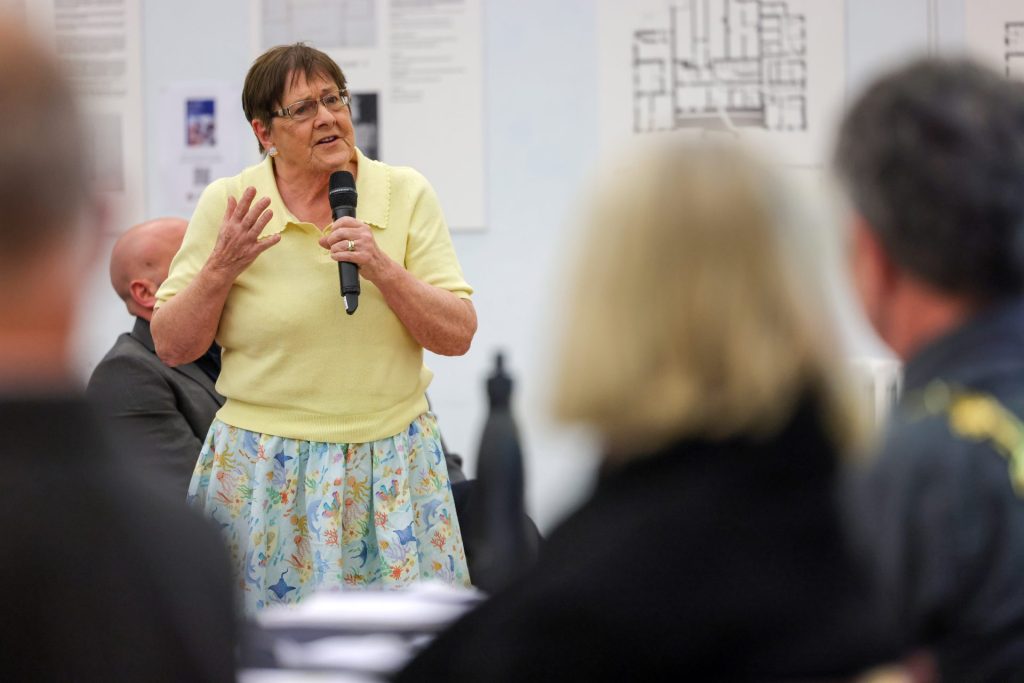
Q: Why does it feel so hard to get a police response on Friday and Saturday nights?
Residents raised serious concerns about delays in police attendance, visible disorder in town, and the impact on businesses and public confidence.
In response, it was explained that:
- local policing numbers are currently under pressure
- sickness and staffing shortages have affected service delivery
- Hotspot patrol targets have been missed in the area
- this is an issue the Council continues to raise directly with senior police representatives
Q: What is Penzance Council doing to improve safety?
Penzance Council said it is already putting significant local funding into measures that support town centre safety, including:
- antisocial behaviour support
- street marshals
- CCTV and related measures
Penzance Council also confirmed that it has been meeting with senior police representatives and pushing for improvements in local policing presence and responsiveness.
Q: What about shoplifting and alcohol theft?
Residents raised concerns about repeated theft from shops and the lack of effective deterrence.
It was noted that:
- some enforcement responsibilities sit with the police
- licensed premises and retailers also have duties around how alcohol is displayed and monitored
- the impact on the local economy is wider than individual theft incidents, because it affects whether people feel safe and confident coming into town
Q: Who is responsible for tackling street drinking?
The legal powers sit with Cornwall Council and the police rather than Penzance Council. It was explained that legislation is already in place, but the main difficulty is enforcement, especially where police resources are stretched.
Q: What powers are available?
The current powers mainly allow for alcohol to be confiscated and disposed of in designated areas. More serious action usually depends on wider behaviour such as disorder or related offending.
Q: What can be done about rough sleeping and vulnerable people in the town centre?
The meeting recognised that this is a complex issue involving:
- homelessness
- vulnerability
- mental health and substance misuse
- limited outreach capacity
Residents were encouraged to use StreetLink to report rough sleeping, as referrals can then be passed to outreach teams. It was also noted that support services exist locally, including drug and alcohol services and safeguarding routes, but there are clear capacity pressures.
Q: What about situations where people refuse support but are still causing distress?
This was acknowledged as one of the hardest issues to resolve. Penzance Council explained that some situations require a multi-agency approach involving safeguarding, outreach, police and adult social care. It also recognised residents’ frustration where the same cases appear unresolved for long periods.
Caravans and overnight sleeping in vehicles
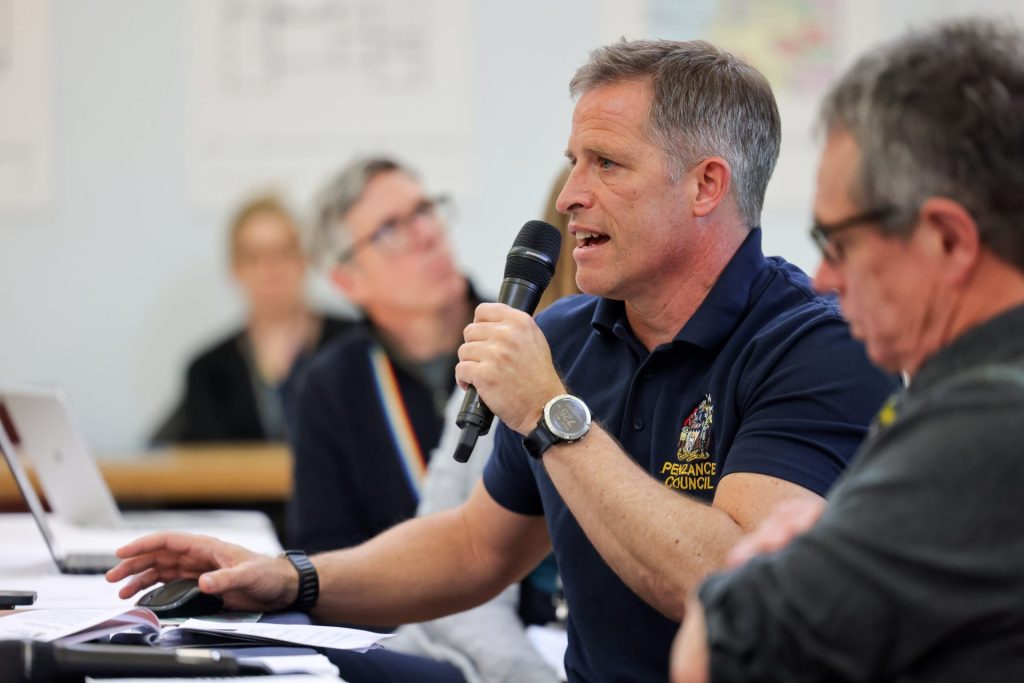
Q: Can Penzance Council move caravans or vehicles being used for overnight sleeping?
Not directly in most cases. Penzance Council explained that this usually depends on legal restrictions linked to Traffic Regulation Orders and highways powers, which sit with Cornwall Council.
Q: Is anything being done?
Yes. The issue is being logged and raised, and the Council said it wants this included in future reviews of the relevant traffic orders so that more effective controls can be considered.
Q: What is the Town Council’s role here?
Penzance Council described itself as an important interface between the public and the responsible authorities. It may not hold the legal power itself, but it can gather complaints, escalate them, and keep pressure on the authorities that do.
Roadworks, bridge closures and town centre traffic disruption
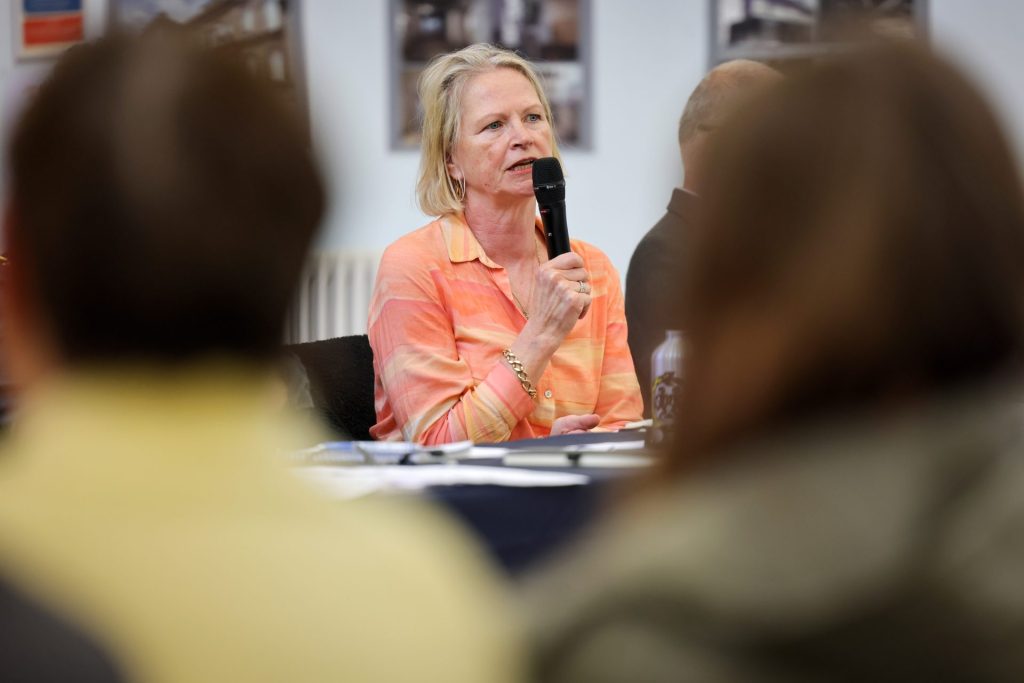
Q: Why has there been so much disruption from roadworks and bridge closures?
Residents raised strong concerns about:
- the timing of closures
- traffic chaos caused by temporary arrangements
- the knock-on effect on businesses, access and daily life
The response given was that the works are being led by Cornwall Council and its contractors, and that the timing has been affected by funding, programming, weather and operational constraints.
Q: Has Penzance Council challenged this?
Yes, repeatedly. Penzance Council and Penzance BID have been pressing hard on behalf of the town and businesses, including on:
- the impact of the works
- the sequencing of closures
- the need for better communication
- the need for practical mitigations
Q: Was the temporary bridge always part of the plan?
No. Penzance Council said that when the project was first presented, there was not going to be a temporary bridge, and that strong lobbying from Penzance Council and Penzance BID helped secure one because of the likely impact closure would have on the town.
Q: Why did some closures seem to remain in place when no work was visibly happening?
It was explained that some closures relate to:
- worker safety
- the practical realities of harbour operations
- weather windows
- the need to coordinate specialist work and equipment
That said, the frustration felt by residents and businesses was fully acknowledged.
Market Jew Street, traffic confusion and enforcement
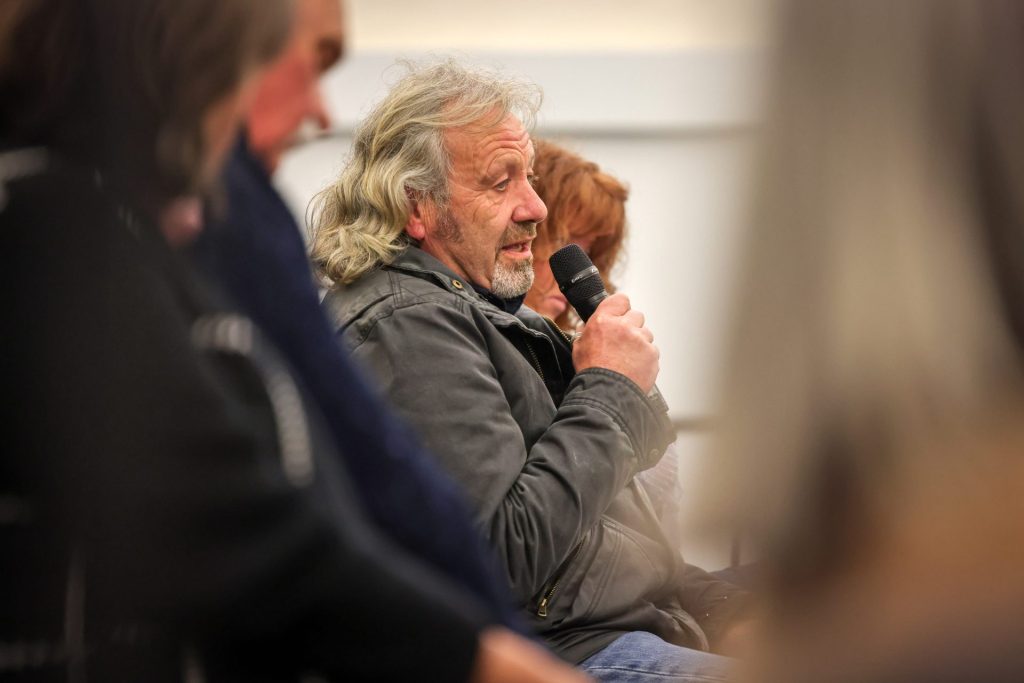
Q: Why is traffic flow in Market Jew Street feeling chaotic?
Residents described situations where vehicles were meeting head-on, having to reverse, or using the street in confusing ways, particularly later in the day.
Penzance Council explained that some of this reflects the fact that:
- the overall scheme delivered by Cornwall Council is not yet fully complete
- road markings and bay designations are still being finished
- enforcement cannot work properly until the layout is clear
Q: Will this improve?
That is the intention. It was explained that once all lines, bays and signage are complete, the street should function more clearly. Only then can the finished scheme really be judged properly.
Q: When will ANPR enforcement start?
A written question asked when the automatic number plate recognition system will go live.
The answer given was that there was not yet a confirmed date from Cornwall Council, but it was expected to be later in the summer, likely after the Highways works are complete. It was also suggested there may be an initial warning period before full enforcement begins.
Accessibility, Blue Badge access and town centre mobility
Q: Are the current town centre arrangements making access harder for disabled people?
This concern was strongly raised by residents, who spoke about the impact on people with:
- mobility impairments
- pain conditions
- wheelchairs and scooters
- limited walking ability
- the need for rest points and short-distance access
The meeting recognised that these issues are real and important.
Q: Has any concession been secured for Blue Badge holders?
Yes. It was stated that a change had been secured so that Blue Badge holders entering Market Jew Street before 11am would not face enforcement for a three-hour period.
This was described as a concession rather than a full solution.
Q: Is the Council doing anything else on accessibility?
Yes. Penzance Council and Penzance BID said they are working on:
- clearer access information and mapping
- improved wayfinding
- identifying key routes into town
- increased seating where possible
- increased accessible crossing points
- improving awareness of accessible routes and facilities
Q: What about Shopmobility?
The meeting heard that Shopmobility remains a free service and is being re-established from a more secure base, with access arrangements being improved.
Public realm improvements and concerns about design
Q: Why do some of the new public realm features feel out of keeping with the town?
This was a strong theme. Residents questioned whether certain features, especially planters and other street elements, were in keeping with the character of Penzance.
Penzance Council acknowledged those concerns and said the design solutions were led externally through the wider scheme that has been delivered by Cornwall Council.
Q: Why were these features chosen?
It was explained that the chosen features were intended to be:
- modular
- durable
- low maintenance
- resistant to damage and graffiti
Q: Who will maintain them?
Penzance Council said that although they may come with a limited initial maintenance period from Cornwall Council, the longer-term maintenance burden is likely to fall to Penzance Council, which already manages many public spaces and planted areas.
Q: Will they look better once planted up properly?
That was the hope expressed. It was suggested that some areas already look better once planting becomes established, and that the visual impact may soften over time.
Newlyn sustainable transport scheme and roadworks
Q: What are the roadworks currently taking place in Newlyn?
The works in Newlyn are part of a Cornwall Council sustainable transport scheme, which includes changes to the road layout, traffic flow, pedestrian crossings, accessibility features and parking arrangements within the town.
Q: What is the purpose of the scheme?
The scheme is intended to:
- improve road safety, particularly for pedestrians
- support walking, wheeling and other forms of active travel
- improve accessibility within the centre of Newlyn
- help manage traffic movement in a constrained road network
Q: Have local people been consulted on the scheme?
It was confirmed that Cornwall Council carried out:
- multiple consultation stages
- both in-person and online engagement
- a review of feedback received
Some elements of the scheme were adjusted in response to consultation comments.
Q: Why do the plans appear different from what is being delivered on the ground?
It was noted that:
- plans may have evolved following consultation and detailed design
- different versions of plans may still be in circulation
- practical adjustments can be made during construction
- Residents are encouraged to refer to the most up-to-date information published by Cornwall Council.
Q: Have emergency services been consulted, particularly in relation to access arrangements?
Concerns were raised about whether emergency access had been fully considered within the scheme.
It was indicated that:
- the project forms part of a formally managed highways scheme
- such schemes follow established processes, which include engagement with relevant services and stakeholders
- Responsibility for ensuring that appropriate access arrangements are in place sits with Cornwall Council as the highway authority.

Reporting issues to Penzance Council and Cornwall Council
Q: What should residents do when a problem is not technically the Town Council’s responsibility?
Penzance Council made clear that residents can still contact the Town Council, even if they are unsure where responsibility lies, or if they are having difficulties contacting Cornwall Council.
Penzance Council said that one of its key roles is to:
- listen to residents
- help people navigate systems
- escalate issues to the right authority
- keep pressure on where responsibility lies elsewhere
Q: Can residents contact Penzance Council face to face?
Yes. Residents were reminded that they can:
- call
- make appointments
- attend drop-in opportunities
- attend Council and Committee meetings, which are all open to the public to attend. Meeting dates and agendas are published on the Council’s website, Social Media and Town Notice boards.
The Council stressed that it wants to remain accessible and responsive, especially because many larger organisations no longer offer the same face-to-face presence.
Q: Is Facebook a good way to report issues?
The message from the meeting was that formal contact by phone, email or in person is better, especially for complex issues. Social media may not be the best place for detailed casework.
Closing message
A recurring message throughout the evening was that many of the biggest issues raised by residents sit partly or wholly with other organisations, especially Cornwall Council and the police. Even where Penzance Council does not hold the final power, it is continuing to:
- represent local concerns
- challenge decisions
- push for clearer communication
- seek practical improvements
- act as a local point of contact for residents
The meeting also showed very clearly how much people care about Penzance, its character, its accessibility and its future.